Image not found
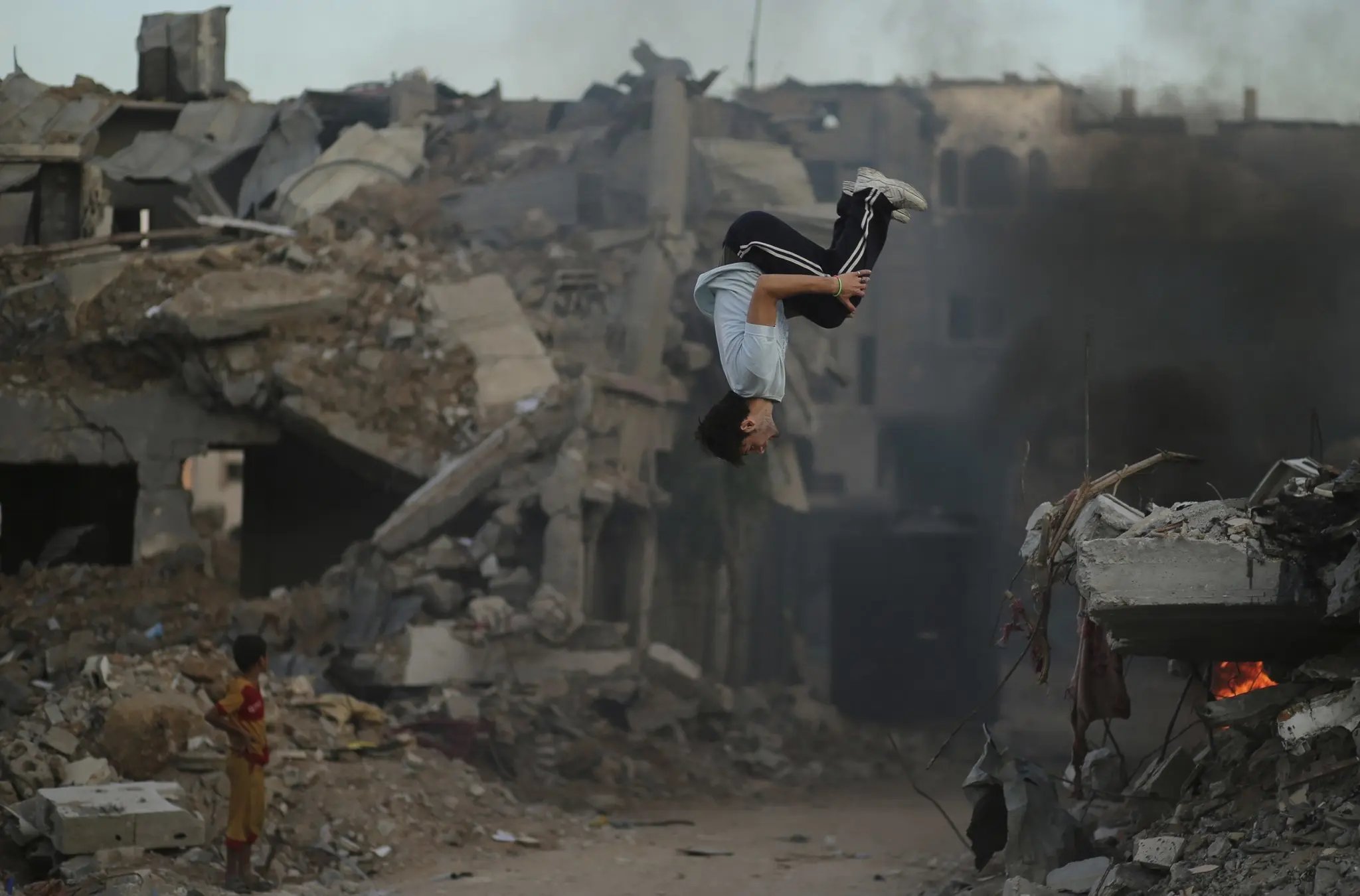
VTS11-17-14LN-superJumbo.webp
- How certain were you, just now, that you understood what you were looking at?
- What did you assume before you had any information?
- Where did that assumption come from?
- What would it take to change your reading?
- This is the only honest starting point. Everything else is pretending.
How to Read
a Photograph
A photograph is not a window onto reality. It is an argument.
Today you will learn how to argue back.
Why Analyse Images?
A photograph is not a window onto reality — it is a constructed argument. Every frame excludes as much as it includes. The camera is not a recording device. It is an editing device.
Photographers choose what to shoot, when, how, and for whom. Those choices carry ideology, power, and intent — whether or not the photographer intends them to.
Images shape what we fear, who we trust, what we consider normal. Analysing them is not a literacy skill. It is a survival skill.
Vocabulary for Image Description
The 5-Step Framework
Framing
What is included — and what has been excluded?
Perspective
Angle can suggest power — but it depends heavily on context.
Light & Shadow
Light often implies hope; darkness often implies threat. Often. Not always.
Absence
What has been cropped out, unnamed, made invisible?
Gaze
Who looks at whom? Direct eye contact demands; averted gaze can objectify.
Normalisation
What does the image treat as ordinary that you should question?
Photographs as
Manufactured Truth
The real question
Not: "What does this mean?"
But: "Why do you trust this image?"
And then: "Who benefits from your trust?"
Cropping is ideology
What falls outside the frame is not absence — it is decision. Every crop is an argument about what matters.
Documentary is performance
The camera's presence changes what people do. There is no unobserved image — only degrees of performance.
Journalism is narrative
Which photograph gets published — not just what is shot — constructs the story the public receives.
The pity economy
Images of suffering travel furthest when the subject is pitiable, not complex. Helplessness goes viral. Dignity rarely does.
Algorithmic visibility
Platforms show what generates the most response — fear, outrage, grief. Engagement is the metric. Truth is irrelevant to the algorithm.
- Who chose to publish this image — and why this one, not another?
- What does repeated exposure to images like this do to how we see the people in them?
- Is analysing suffering a neutral act — or does the classroom frame make it safe in ways it shouldn't be?
- You are about to look at a photograph of something that happened to someone. What do you owe them?
- What is impossible to see from the photographer's position?
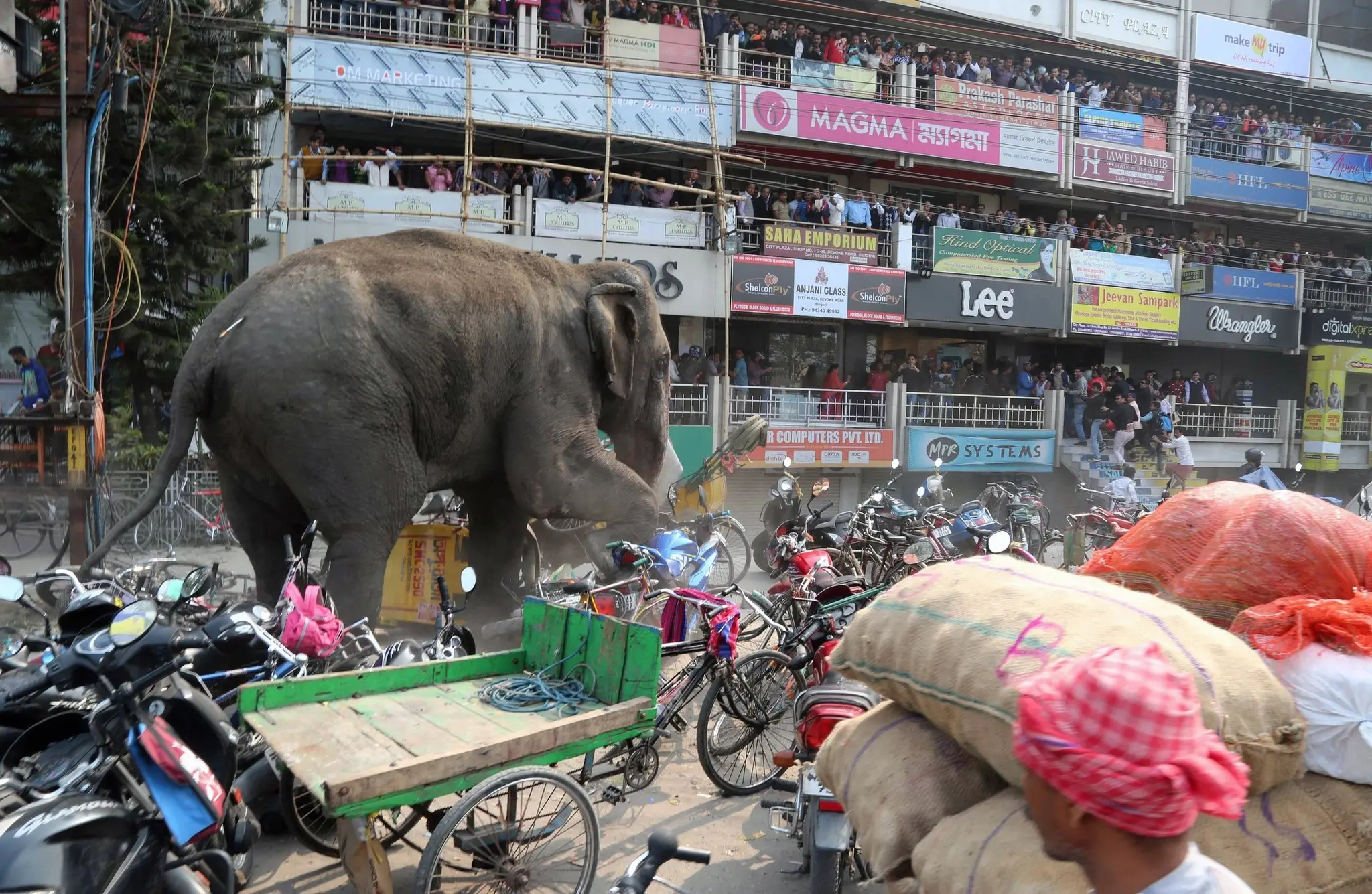
Image not found
VTS02-22-16LN-superJumbo.webp
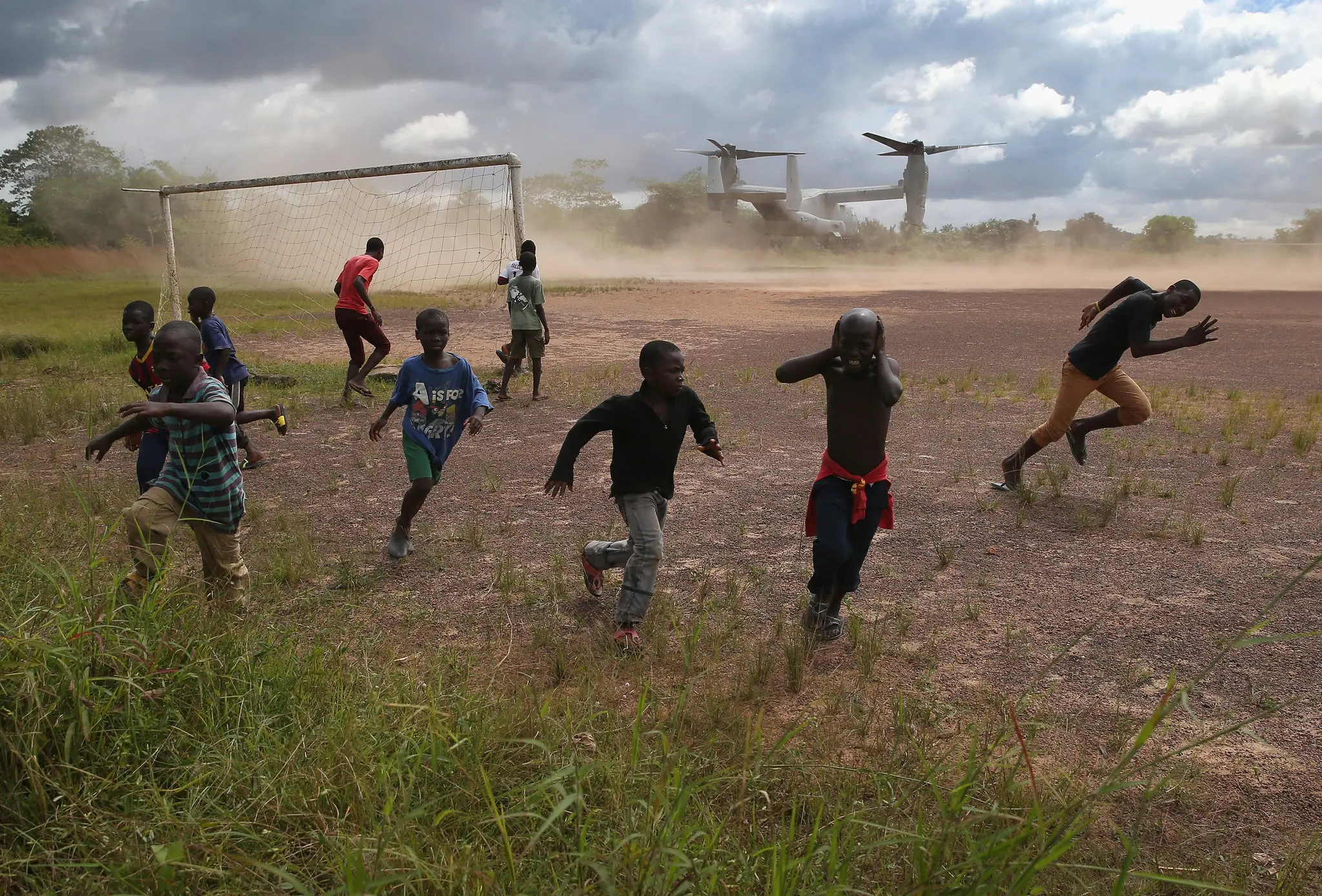
Image not found
VTS11-03-14LN-superJumbo.webp
Write your answer down. Commit to it.
Children scatter as a US military
V-22 Osprey lands on their football pitch.
The US military was arriving to assist with the Ebola crisis in West Africa. The children had been playing football. The aircraft landed on the pitch without warning.
The running that looks like play is flight. The dust that looks atmospheric is the aircraft's rotors. The photographer was embedded with the military. The caption — if used — determines everything about how this image is read.
Most people, at first glance, read this as: children playing football in a dusty field.
Now look at the image again in your memory. The children are not running towards anything. They are running away. The scatter pattern is not play. The dust source is not wind.
Was the photographer's caption neutral — or did it frame this as "humanitarian arrival"?
Who benefited from a photograph that looks like disruption-as-progress?
What would this image mean without any caption at all?
What would it mean if a different photographer — not embedded with the military — had taken it?
Image not found
VTS11-17-14LN-superJumbo.webp
Has your reading changed? What does the image want you to feel — and is that different from what it makes you feel?
Class Discussion
Test Your Reading
Which interpretation is most supported by specific visual evidence? Where does your reading break down?
Surface Your Assumptions
What did you bring to these images before you even looked? Who might read them completely differently — and why?
Follow the Power
In each photograph: who commissioned it, who is visible, who is absent, and who benefits from the image existing?
Writing Task
Write a structured image analysis of 10–15 sentences across all 5 steps.
Use your worksheet notes · Full sentences only · 15 minutes
Describe what you can see. Include people, objects, setting, mood, composition. Use the vocabulary you have.
Note what you did not yet understand before you knew the context. What was unexplained?
Explain when, where, and for whom this was taken. What situation does it relate to?
State what is happening, supported by specific visual evidence you can point to.
Analyse how the image positions the viewer. Use techniques — framing, angle, light, absence — as evidence.
Key Takeaways
Photographs are not windows. They are arguments. Every frame is a choice.
Absence is evidence. What is not shown matters as much as what is.
Context transforms images. The same photograph means different things in different hands — and different captions.
Strong analysis follows the power: who commissioned it, who is visible, who benefits from this image existing.
Some images resist the framework. That resistance is a finding. The point is sustained uncertainty — not a final answer.
Find a press photograph from a news website or history archive. Apply all 5 steps in writing. Then: identify one thing the image makes invisible, and one thing you cannot explain using the framework alone. Bring both to the next lesson — be ready to defend your reading.
English · Visual Literacy & Image Analysis